During late spring the rose myrtle turns up in bloom both inside Taipei and through the hills around it. I took these photos on top of Jinmian Mountain (金面山), but I’ve bumped into it in plenty of places. The scent is far more delicate than the sweet osmanthus everyone knows — you have to lean in for it — but it’s there and pleasant enough.
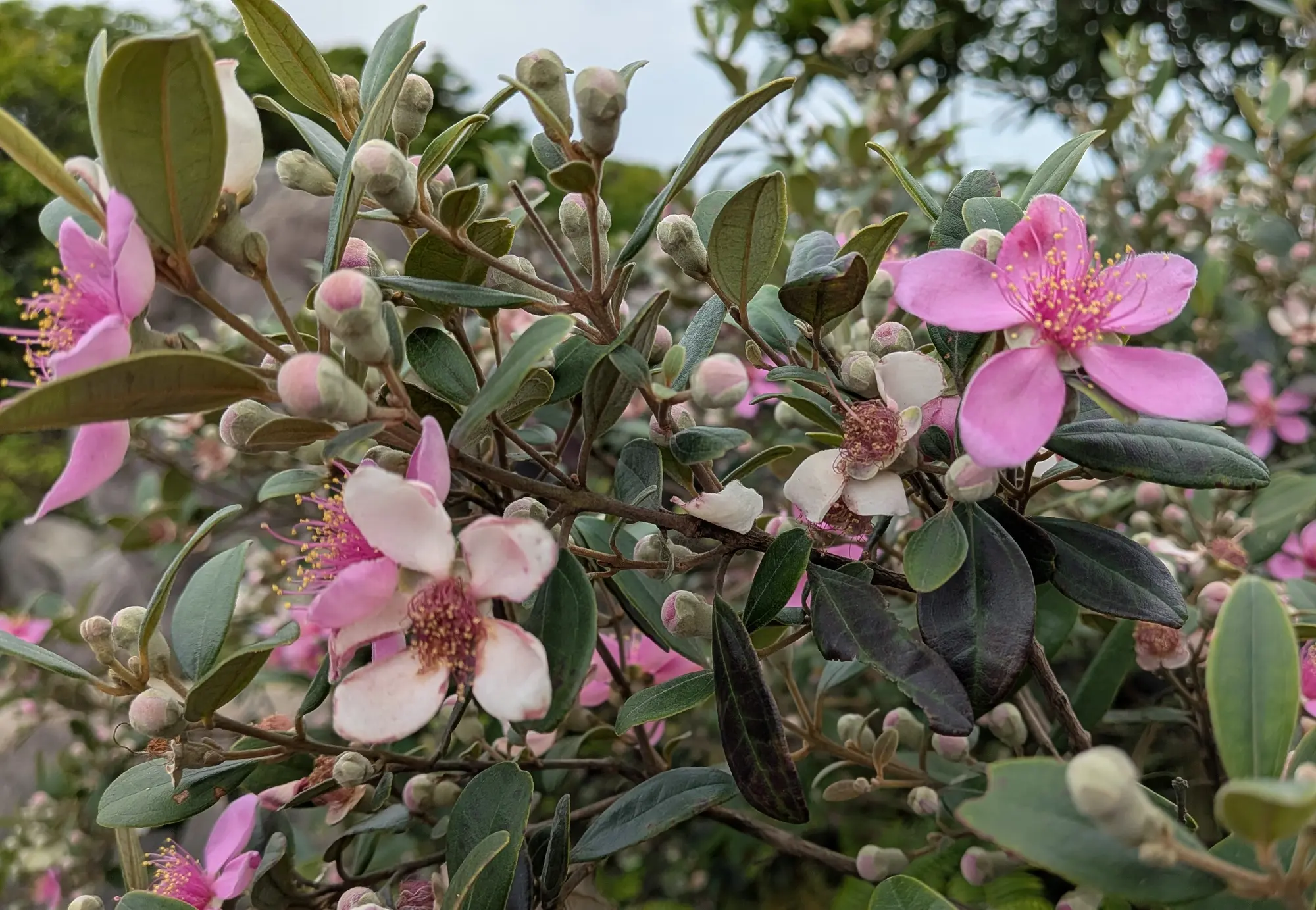
Up close the flower is almost cartoonish with its five rounded petals like crepe paper and two-tiers of stamens. The outer ring is yellow around an inner cluster of pinkish-red. The second half of the flower’s name,tomentosa, means densely covered in short, matted hairs, and if you run a leaf you’ll discover this for yourself.
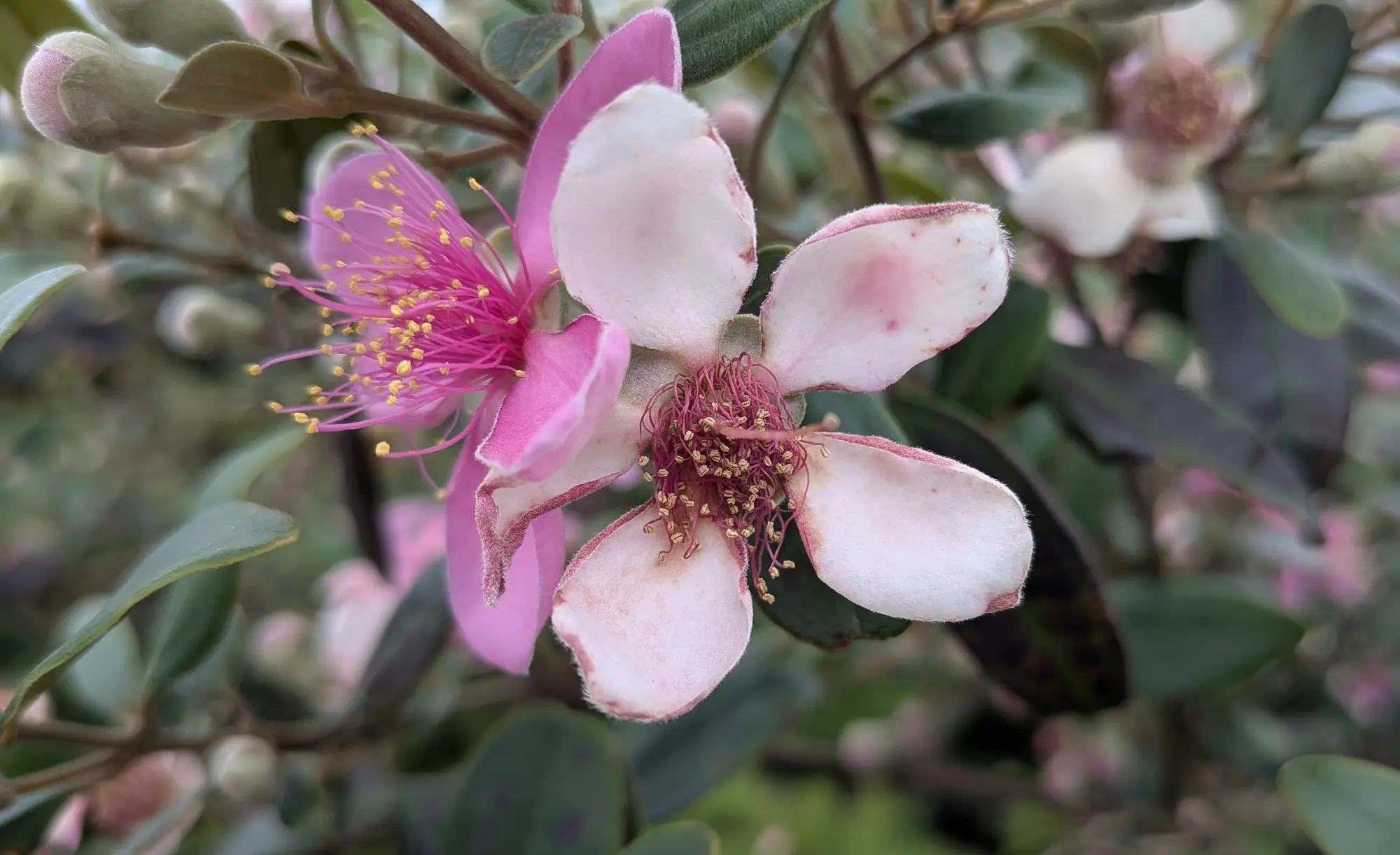
It’s an evergreen shrub, usually 1–2 m tall, and has these sort of oblong leaves 4–7 cm long which are dark and glossy on top with silvery-woolly hairs on the underside. The rose-pink flowers are 2–4 cm across and, while buds and young growth are wrapped in dense white-pink wool. Once the flowers are gone you’ll be able to find a soft purple berry (sorry, no photos of these, yet).
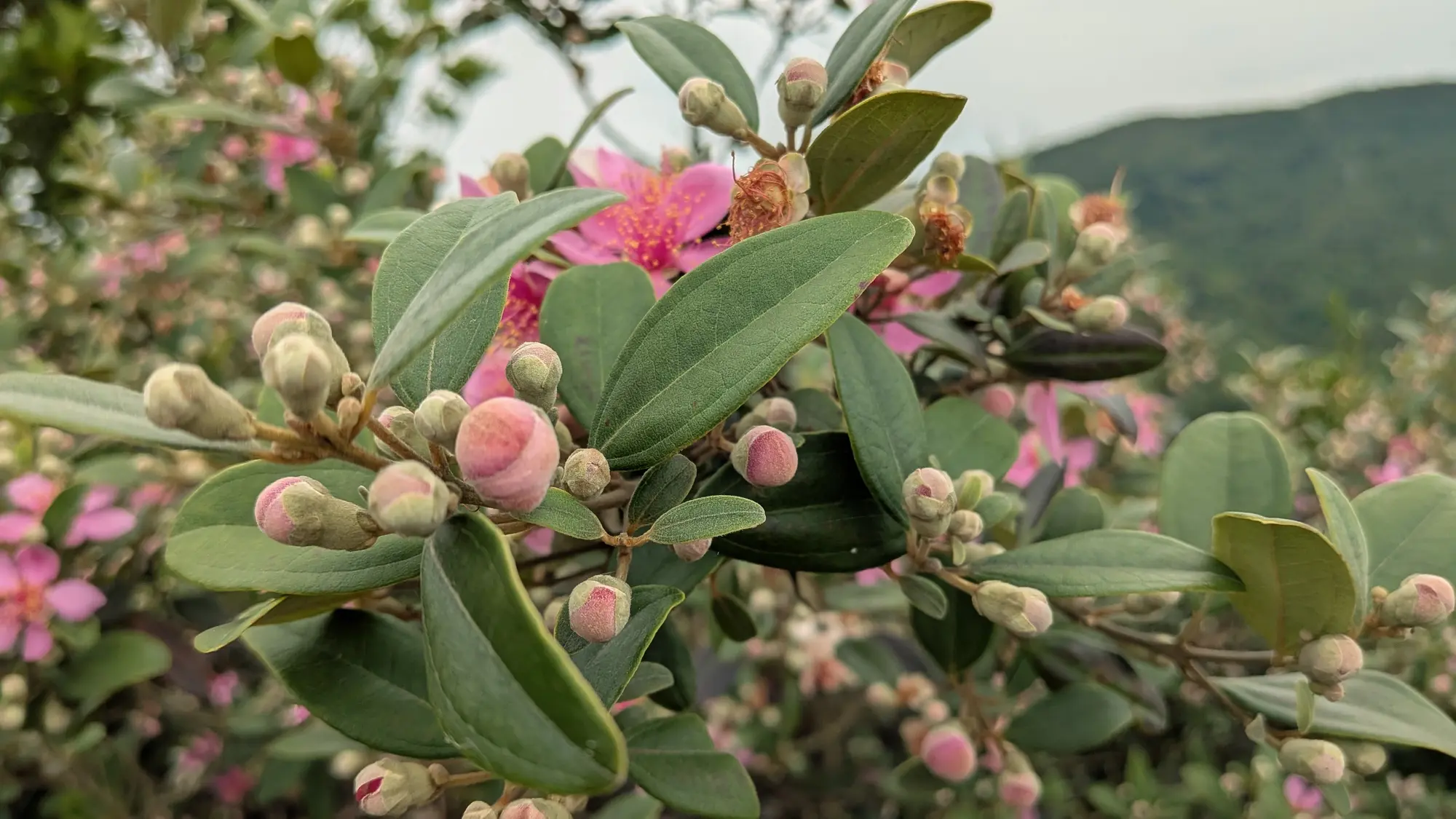
Despite the name and the look, it isn’t a true rose. Rose myrtle sits in the myrtle family (Myrtaceae), which is unexpectly the same family as eucalyptus, clove, guava and tea trees. Still, the resemblance is real enough that the comparison isn’t wrong.
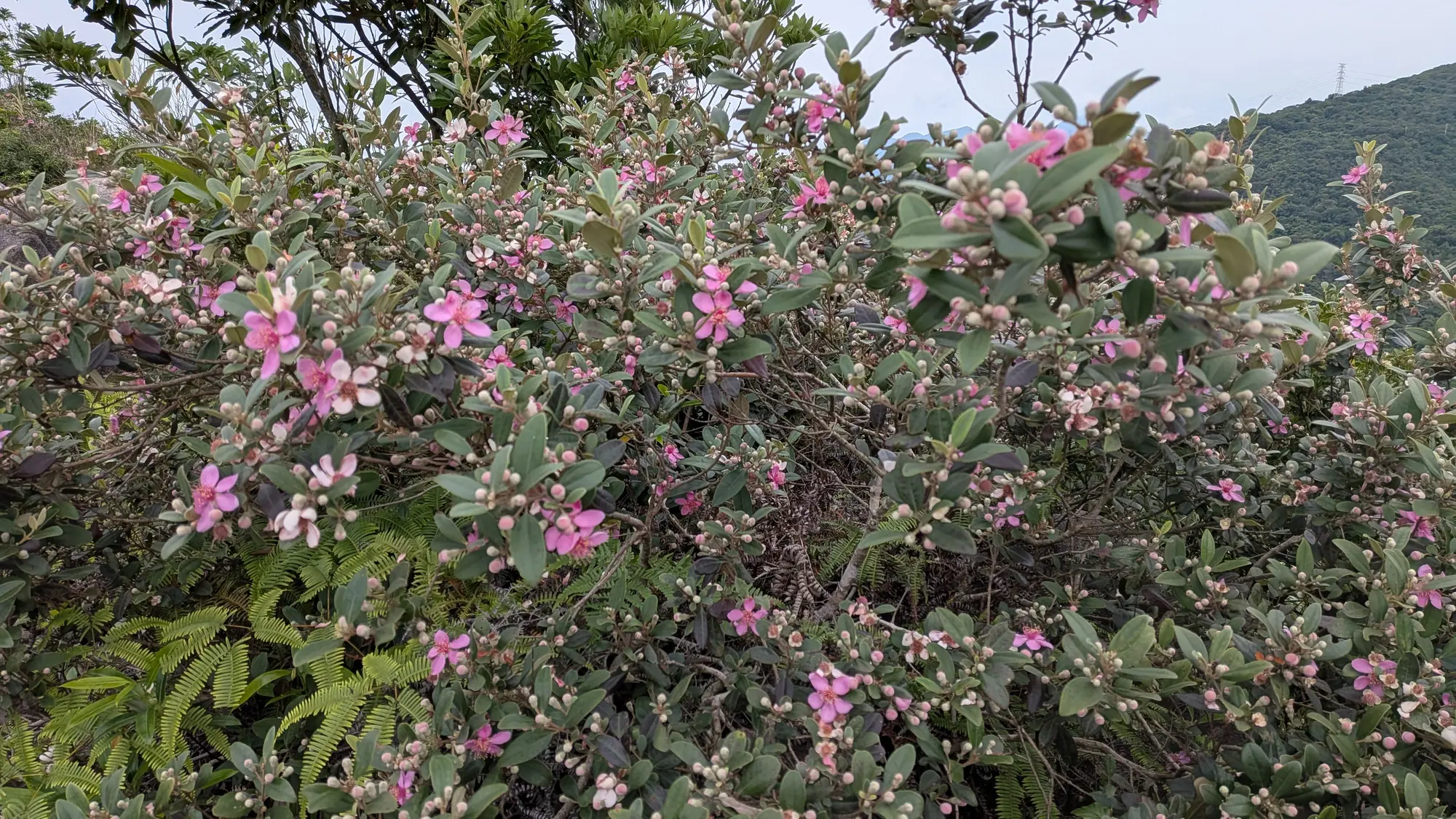
It’s native across South and East Asia, including Taiwan’s low- and mid-elevation hills, where it often forms dense thickets on old pastures and disturbed slopes. This was was found in the rocky outcroppings which stretch along that strip of the ridge trail. Flowering peaks from April into July, where afterwards you can find the aforementioned purple berry. Do not attempt to eat this without consulting a profressional, but supposedly the purple berry is edible and faintly sweet, having long been used for jam and wine in southern China and Taiwan. Again, don’t take a random person’s say-so, and do your due diligence.