I found this little weevil plodding along a weather-worn handrail on trail in Neihu, a district in Taipei. They were kind enough to stop walking as I loomed over to snap a few photos.
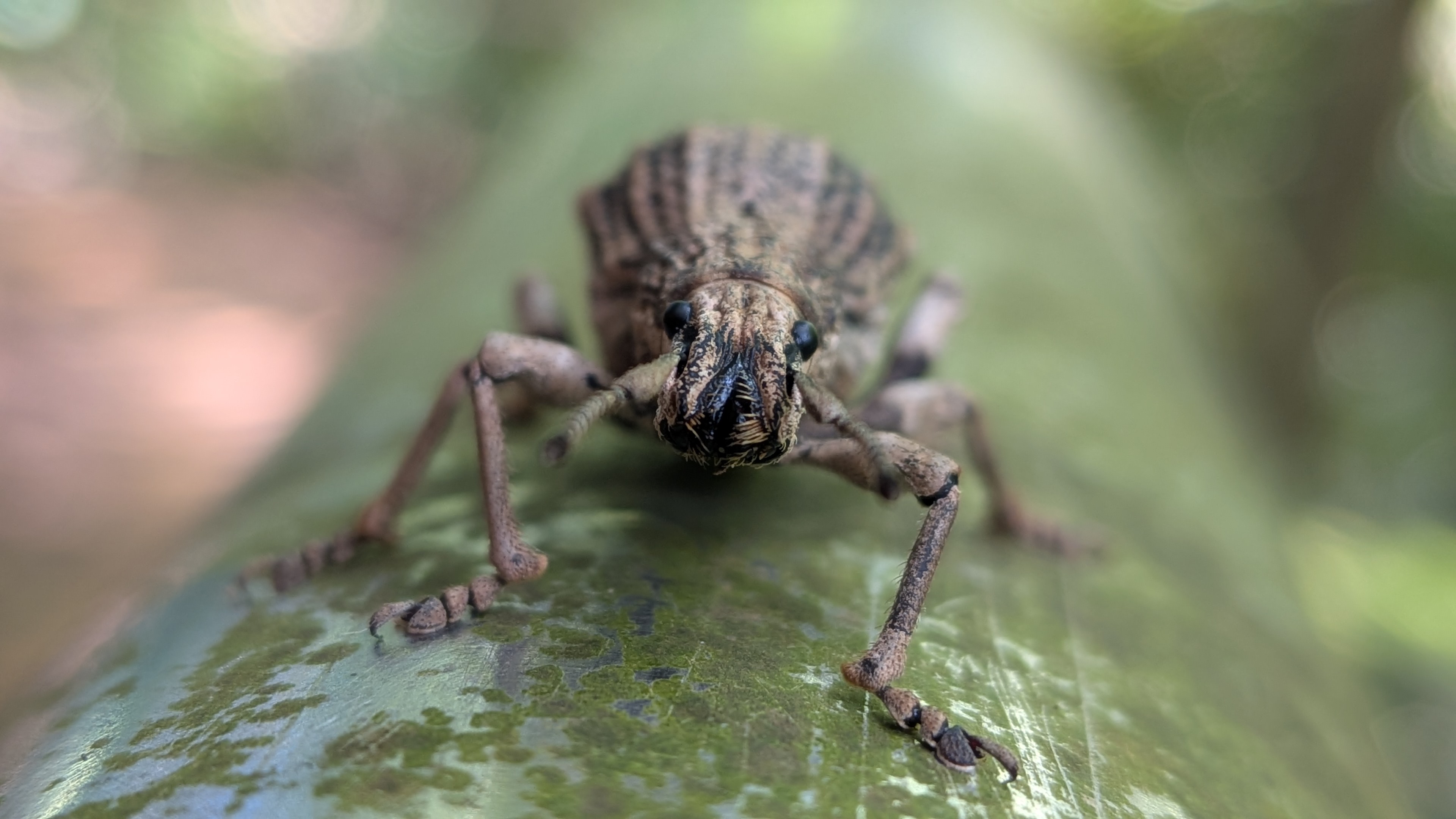
There are hundreds of weevil species in Taiwan, with more being found even today (source), though I’ve found identifying them can be difficult. It’s often easy enough to get down to the family or genus, but due to the way weevils can change appearance as they age, pinning down the species can require more work. For this one, I was able to narrow the genus down to what I’m fairly certain is Episomus. There are only four species of this genus found in Taiwan, of which three are endemic:
The odd one out is Episomus albiguttatus, for which I couldn’t find information with the Latin and Chinese names. Gagaphotos was the only site I could find showing all photos of four Episomus species, so it could be the right one, but it’s difficult to say if it’s accurate. It was classified in 1910, which makes me wonder if it exists, was misclassified, unstudied or succifienctly rare. One thing I found was on this site about sea slugs:
The specific epithet albiguttatus is a Latin compound of albus (“white”) and guttatus (“spotted, dotted”), meaning “with white spots”, referring to the conspicuous white nodules on the dorsum.
This could match the photo, but going off a guess in Latin is not the best indicator.
For the photo below, it leaves me guessing it’s one of the other three. The name for Episomus watanabei in Chinese (灰隆背象鼻蟲 - gray-backed weevil), as well as the photos I found, insinuate a grayish coloring, whereas this one is more brown mixed with black. Given that, if I had to guess, I’d say it is one of the remaining two, and I’d lean towards Episomus chinensis, as the coloring and hind protuberances (apical tubercles) are more closely aligned.
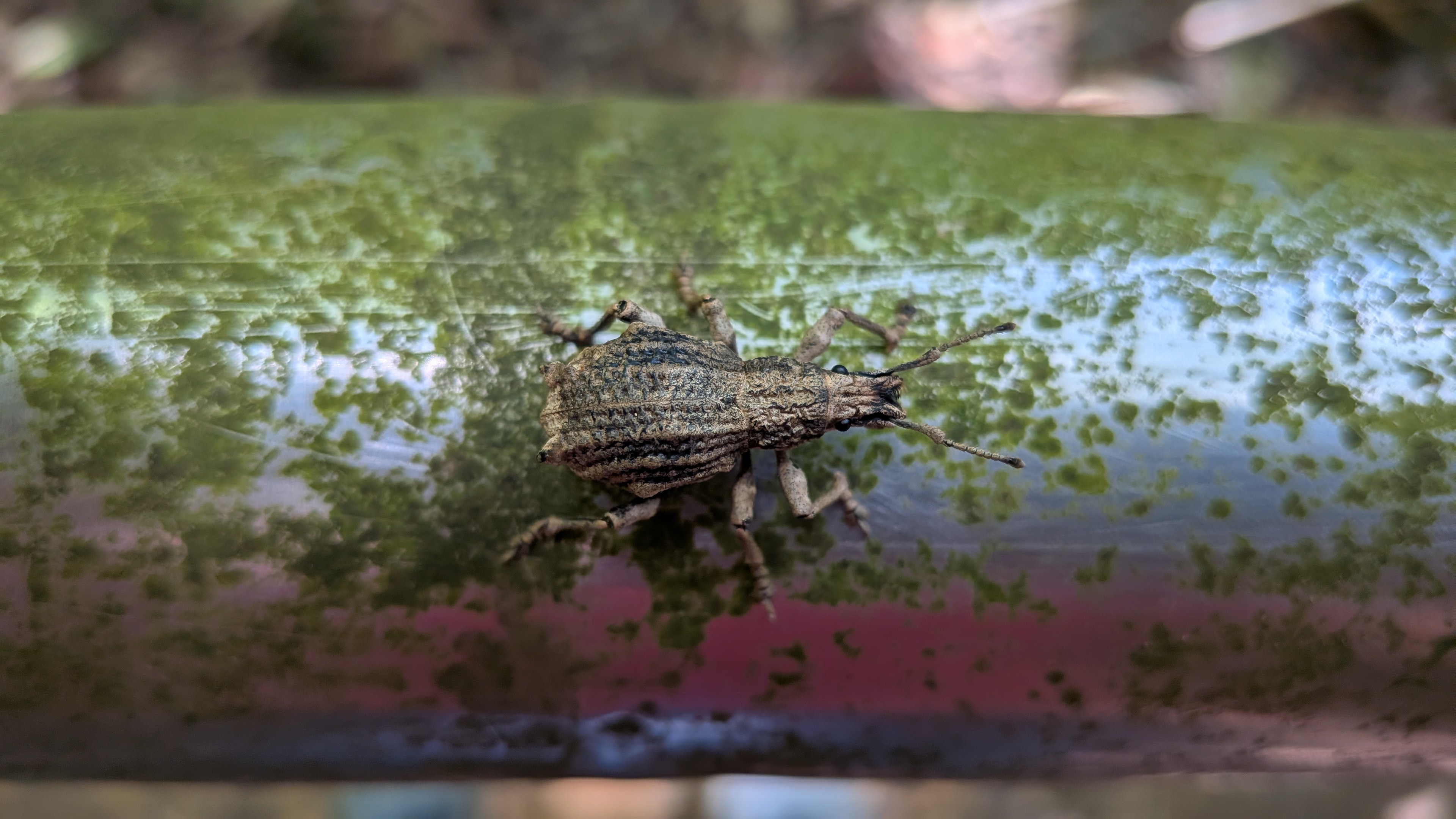
That being said, color is weak evidence, as the scales which lay on top of the black cuticle will be scuffed and faded with age (I think this makes them look more distinguished, much like myself), whereas juvenille weevil looks more evenly colored.
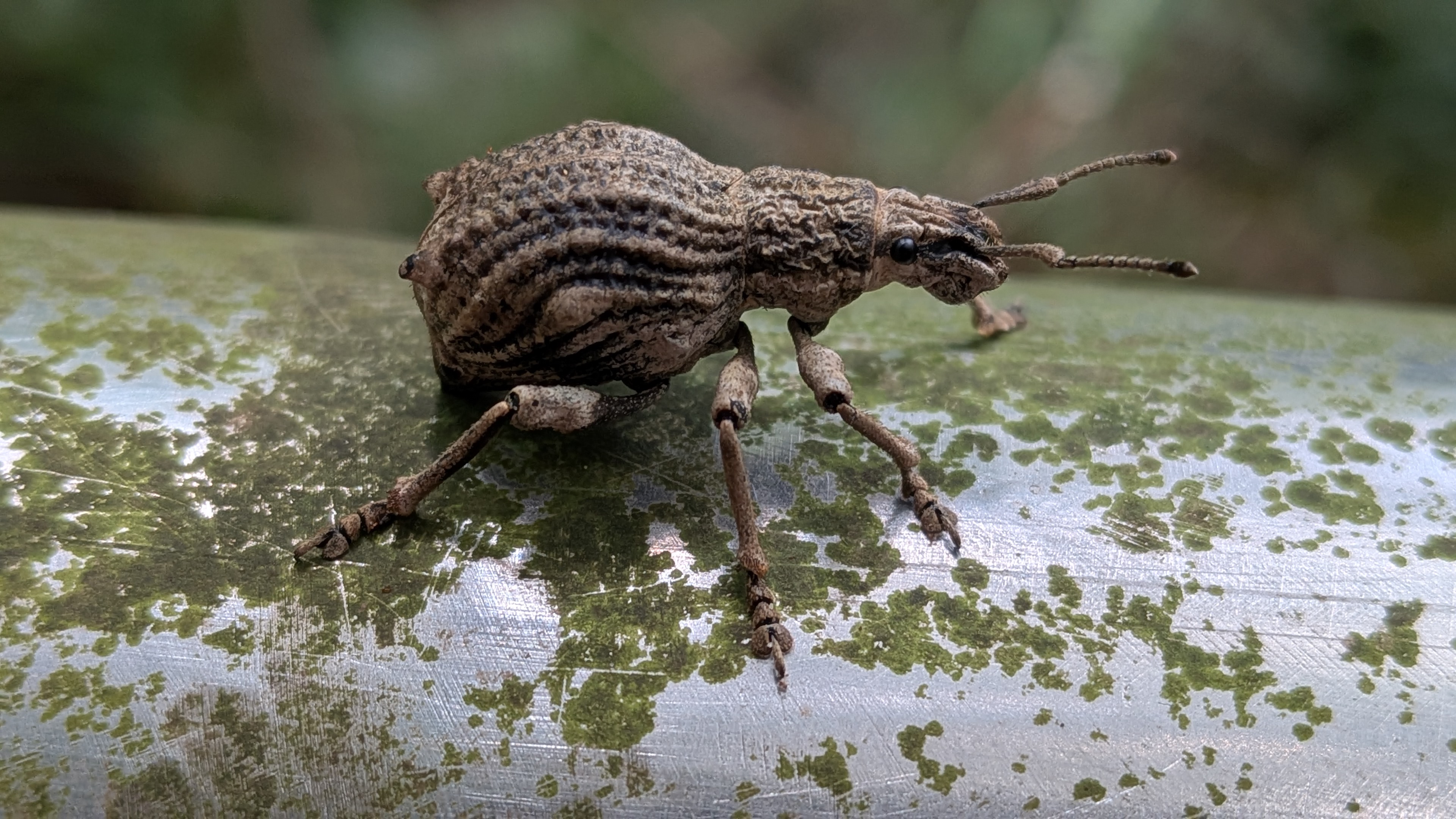
Whichever species it is, it was one of the more will photographic subjects I’ve had of its kind.